A SHORT MUSICAL BIO
Long before I was a historian

For whatever reason—-I don’t think I showed any interest at all—-my mother bought a piano and signed me up for lessons in the early 1960s. I wanted drums. I got a piano. Worse, I had two different teachers—-whose hearts were in the right place but their methods not—-who both had me simply memorize pieces of music, from Chopin to Bach.
They taught me no musical theory, how you structure chords, what passing tones were, what blue notes were. Nothing. Yeah, I could play recitals but had no idea what I was doing. And I hated it, and still wanted to play drums.
In the late 60s, my mother finally gave up and bought me a Ludwig snare drum. It was chrome, 6 1/2” by 4” as I recall. I never really liked the sound, but despite constant experimenting, couldn’t find a different drum I liked better. I took drum lessons from an incredibly talented guy at Chandler High, who later when on to write original music for Disney and to have a stage act in Vegas. He died way, way too young of the familiar “undetermined causes” back in the day that usually were code for drugs or drug-related pathologies.
Slowly, partly on my own, partly with help from my parents, I acquired a bass drum, high-hat, a cymbal, and a tom tom. Only later did I get another crash cymbal and a floor tom tom. I recall riding my bike about 4 miles to the other side of town with my cash, including a ton of pennies (which I’m sure the music store owner didn’t appreciate) to purchase that first tom tom, then hauled it back on my Stingray.
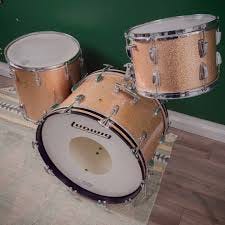
We had a spare bedroom, so I set up shop in there with my record player (kids, ask Alexa). And all I played were Beatles songs, one after another, playing along with Ringo, who is one of the greatest drum teachers ever. All you had to do was listen to him Ringo.
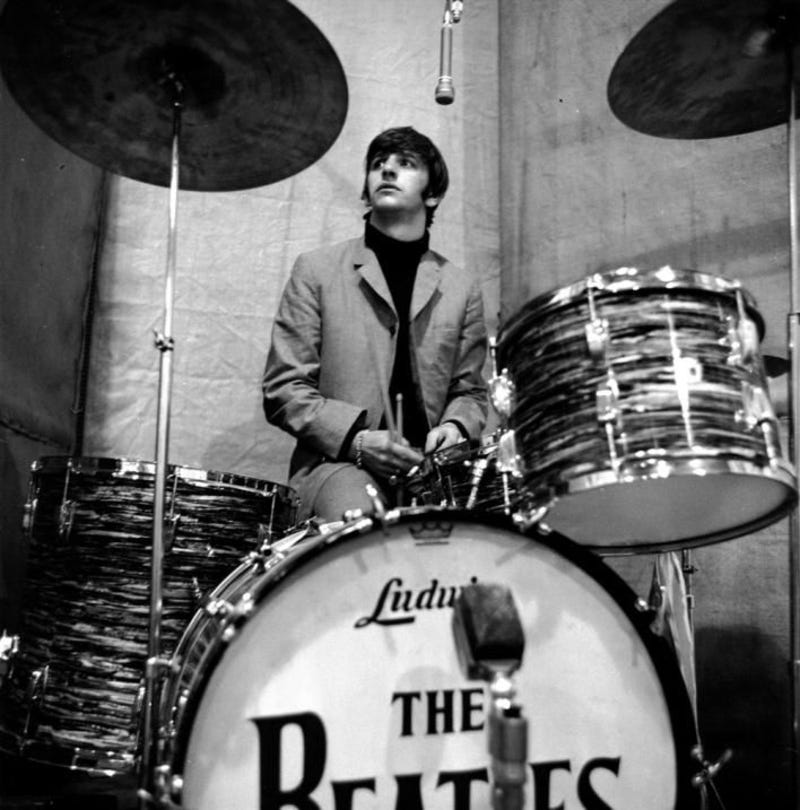
From Ringo I learned so many things: How not to overplay; how every song had a different character and your beats must match that character; and above all how to play a waltz, cha-cha, hesitation beat, and standard rock.
As I became competent enough to play with a group, we played for various adult dances doing show tunes.
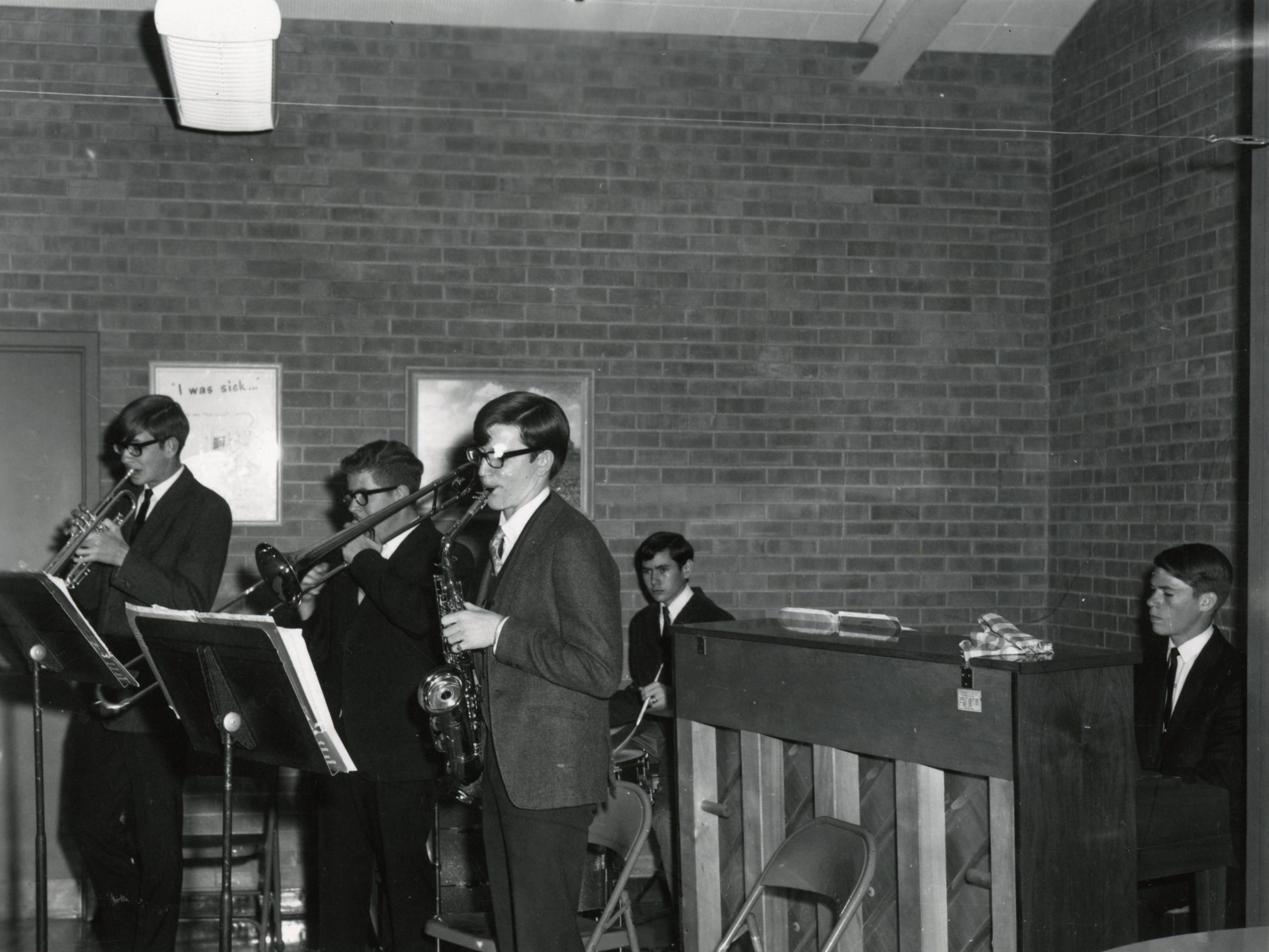
Almost none of these bands had bass players, so it took a long time for me to learn to play with the bass.
Soon I was playing with guitars and keyboards and bass players. My first “rock” band was called Something Special (which we were not). We played Lovin’ Spoonful, Animals, Herman’s Hermits, Freddy and the Dreamers, Gerry and the Pacemakers, the Stones, and a few Beatles songs, though I think at the time we were so in awe of the Beatles we were afraid to do their songs.
Before long with some personnel changes we formed “Shotgun,” a heavier band doing Cream, Jimi Hendrix, Doors, Bloodrock, and Grand Funk Railroad. We played a Battle of the Bands, where we came in 2nd, but the local recording studio boss liked us so much he gave us a free session to record two songs, and original and our Vanilla Fudge version of Day Tripper, which was pretty good. It was funny: we had a great, great singer, but we lost every single battle of the bands with him, but won the only time he wasn’t with us.
You meet so many different people in music. We had one guitarist who was a terror on a lead—-but absolutely could not count music or understand syncopation. It was hell trying to get him to play “Sunshine of Your Love” or “Inna-Gadda-da-Vida.” Another time we lost our guitarist, who moved to Kollyfornia, and put an ad in the PHX paper. A guy showed up with amps and cases stenciled “Buffalo Springfield.” He insisted he was Ritchie Furay—-but he clearly wasn’t. He claimed that was his stage name, and that’s why his license said another name. Here’s the thing: he played exactly like Ritchie Furay and could flawlessly play all Buffalo Springfield songs. We passed
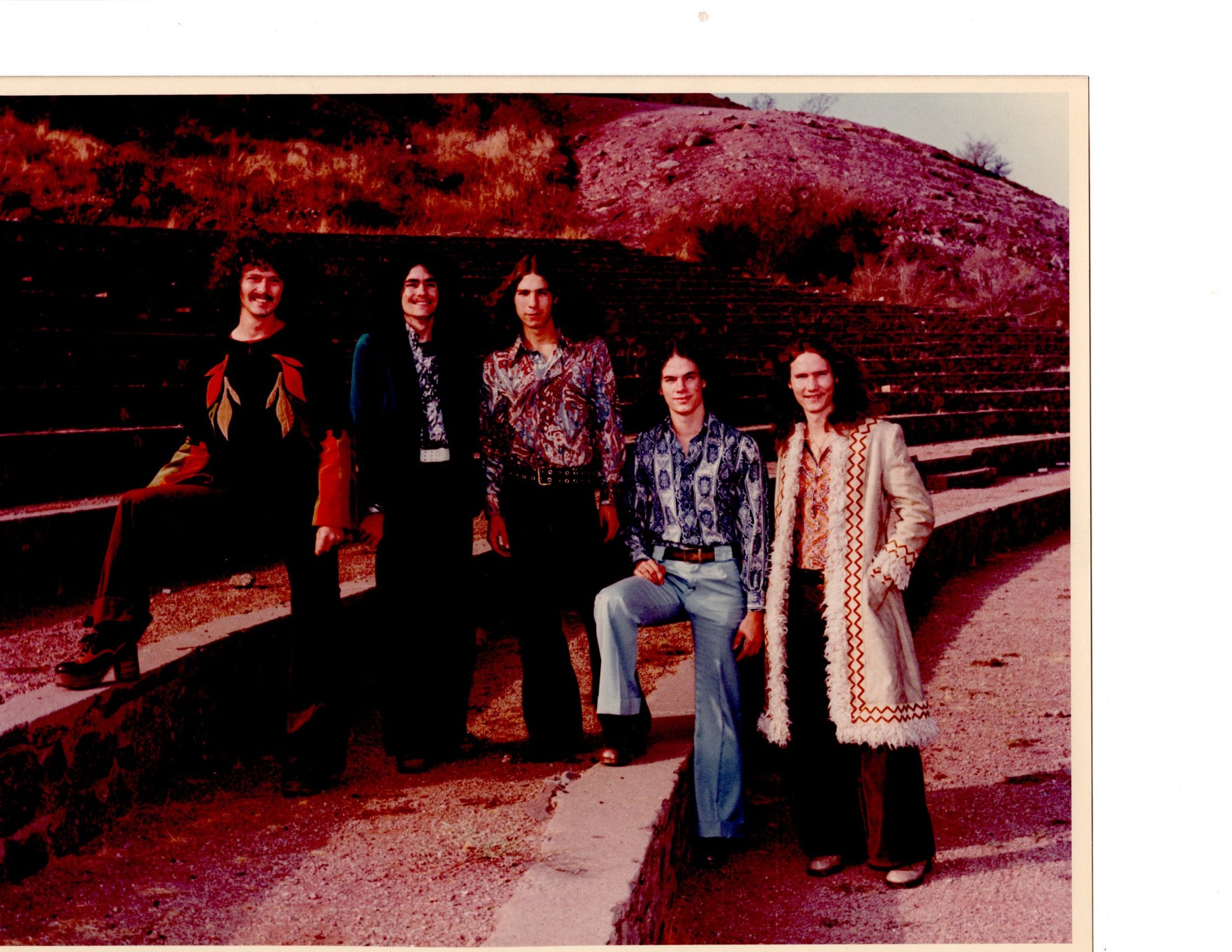
Bands come and go, as did Shotgun. I auditioned with a harder-still group in Mesa, and we formed Whip. A very good guitarist was the key, and we were a good, but not great, band.
When that group broke out, one of the top bandleaders in Phoenix, John Tatum (who had just quit the “Spyders” when they moved to LA to become . . . Alice Cooper . . . created a five piece band with him, me, his wife, and two of my older bandmates called “Goldmyne.”
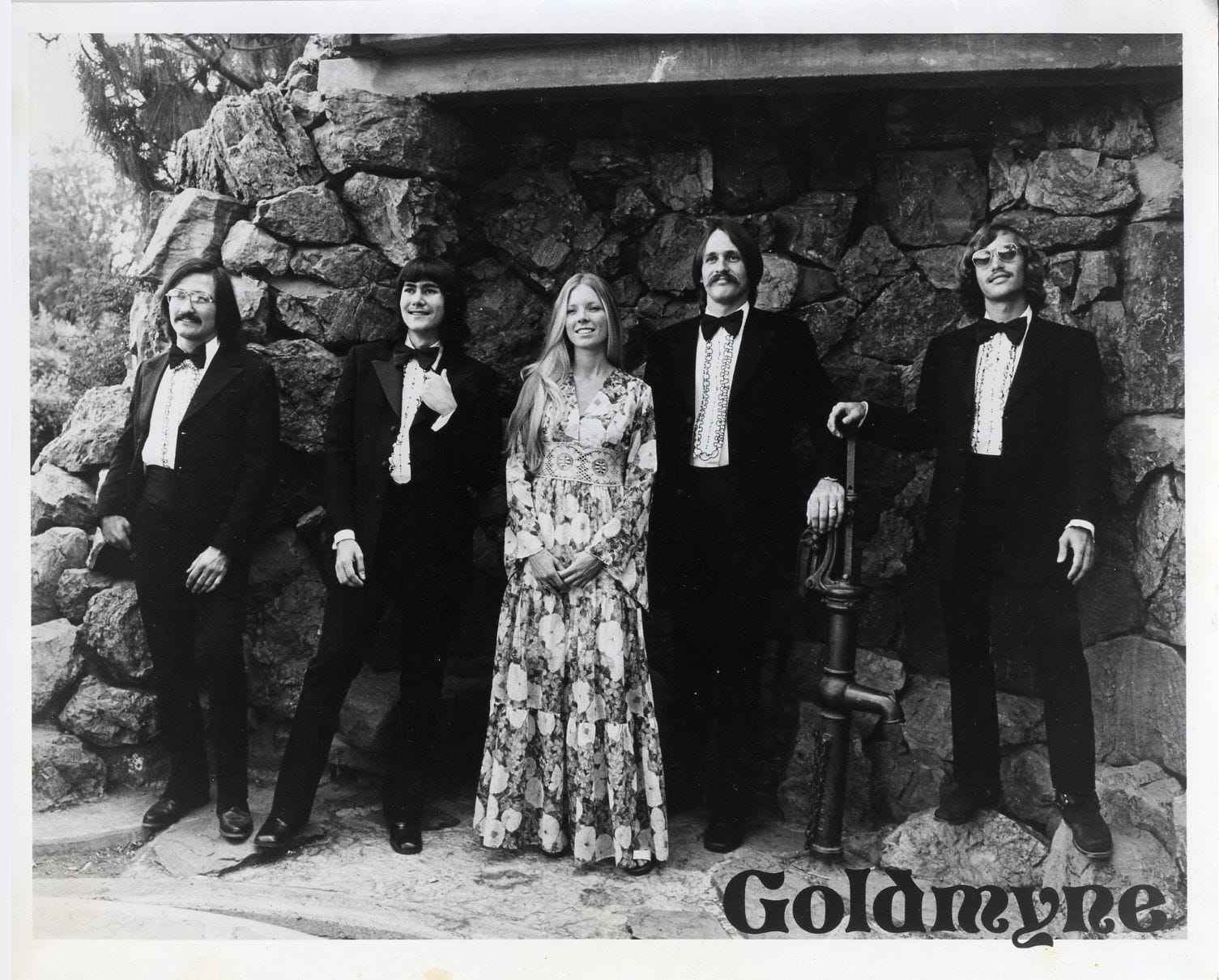
We were playing the club circuit, and literally the minute I graduated ASU with a degree in political science in 1972 I was in a van headed to play in Peoria. Yes, we played in Peoria. Iterations of that band played for a couple of years, nearly constantly on the road. And, as always, we broke up. I returned to Phoenix, and John had gotten a job in a music store where he hooked me up with a group of Southern boys who found themselves trapped in Apache Junction with no drummer.
When I went to their extremely remote house in the desert, I was shocked to see that they had insulation and mattresses lined up against the walls to deaden the sound. Dang, I said, they must really be loud. So when I kicked off the first song, I played as loud and heard as I could. They loved it. “Rampage” was formed.
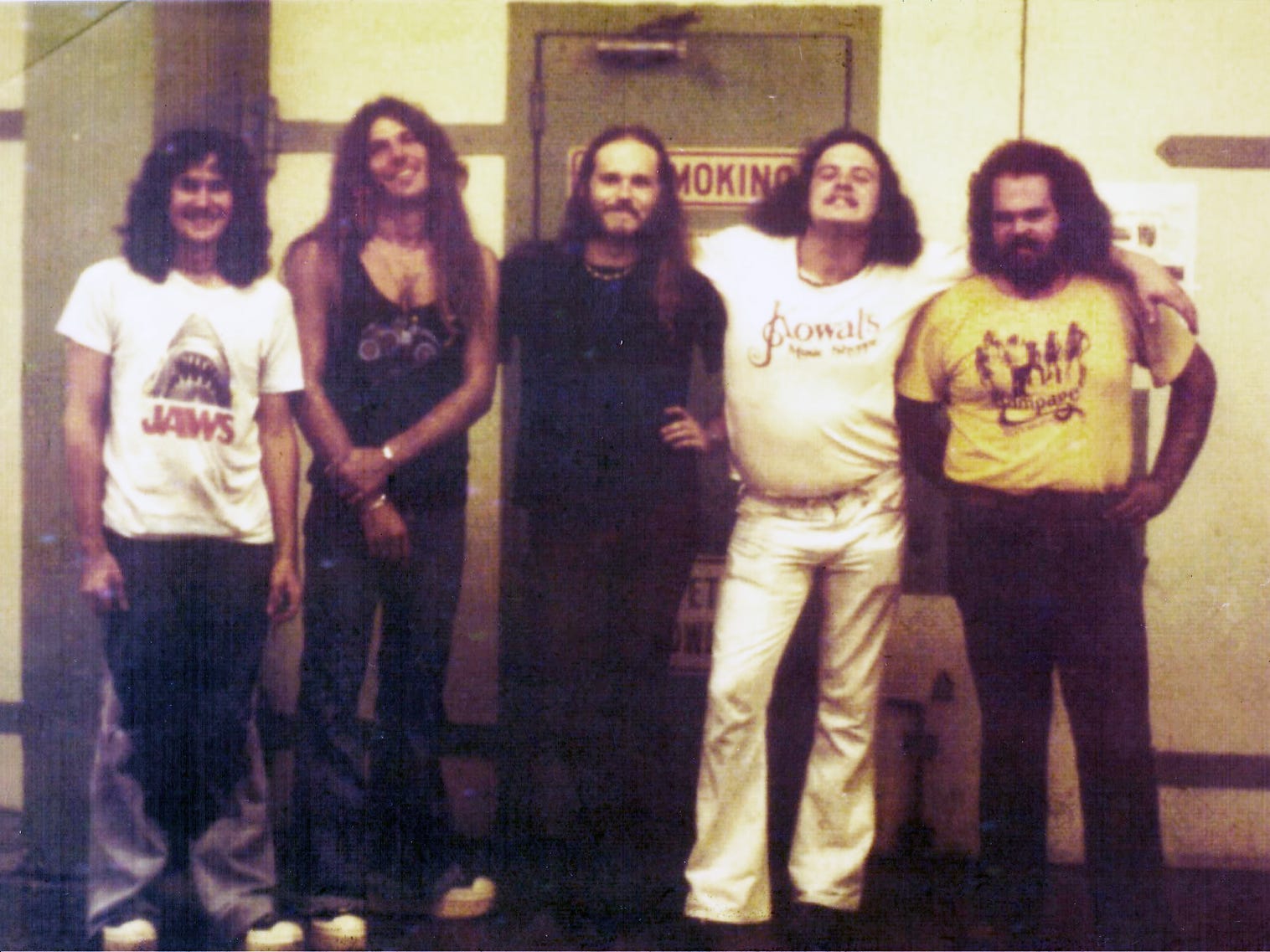
Eventually we added the singer, Doug, next to me, and moved into original material. We had at least four really good songs. Doug could write good, clever lyrics and the rest of the band added bridges and breaks that turned them into high quality tunes. We played a tour line stretching from CA to AZ, CO, NM, then always for some reason skipped TX, then played LA, MS, and lots of FL spots, particularly the Performing Arts Center (now burned down). At the Mother Lode in Tampa, Raiders defensive end John Matuzak came in; on another occasion, a fight broke out next to the stage and the bouncers sprayed the combatants with mace, hitting our guitar player, who didn’t even notice. (He’s second from right). They were all big, big guys. (Notice our keyboardist, Aundra Browne, on the end, has a “Rampage” t-shirt on.
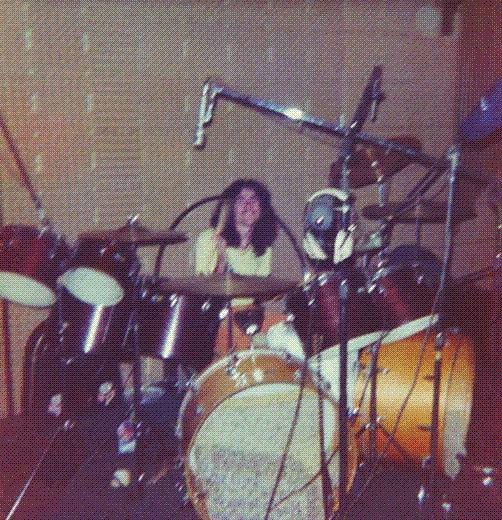
We recorded four songs in a small, four-track studio. Best drum sound I ever heard for my set. We printed 300 copies to give to A&R guys, record labels, booking agents. But we didn’t have distribution to sell. Nevertheless, to our amazement, Record World, Billboard, and Cashbox all gave “Didn’t Want to Have to Say Goodbye to You” rave reviews. (You can get the song on iTunes under the movie soundrack for “Rockin’ the Wall” along with our other really good song, “Shake it if You Got it”.
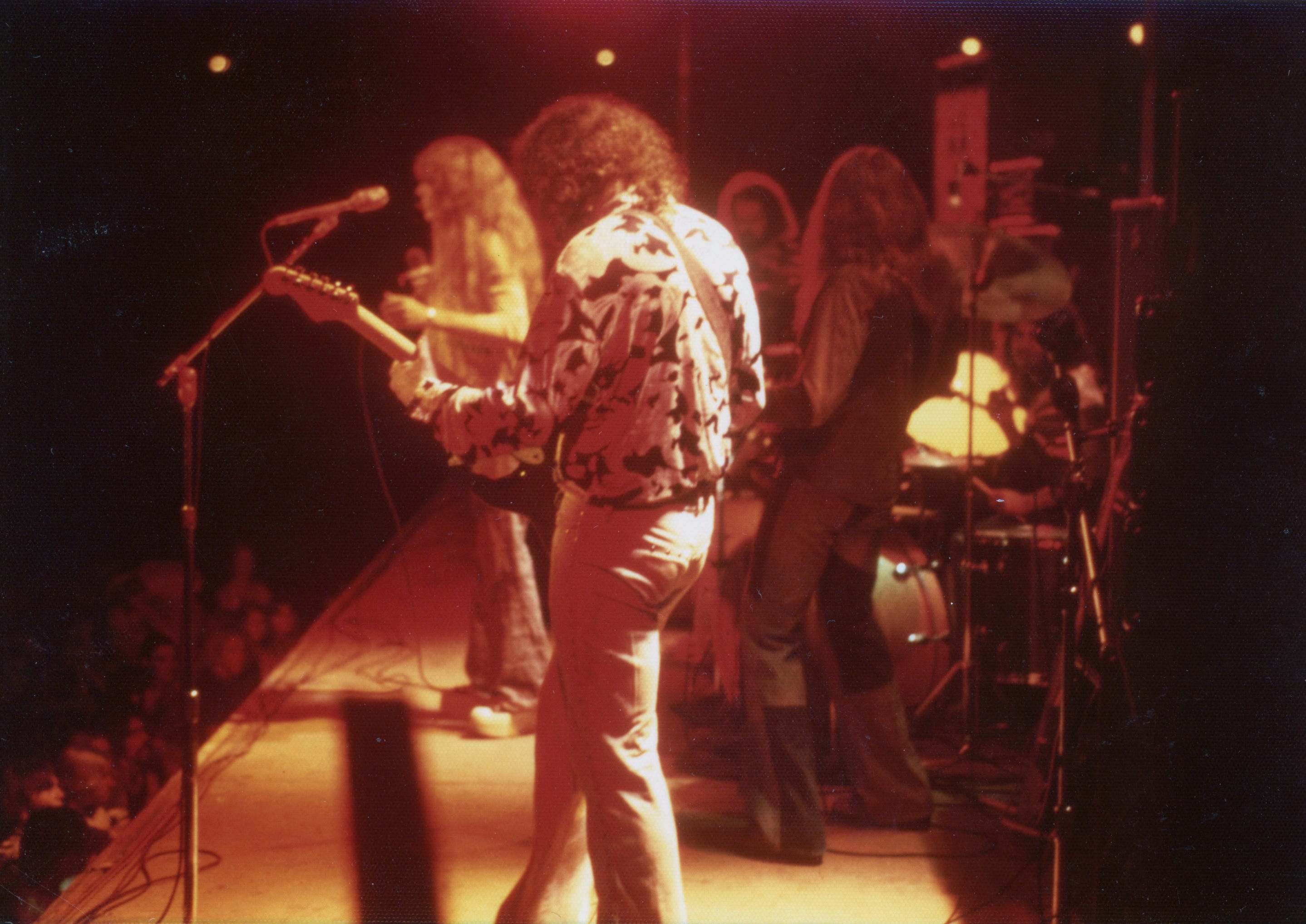
We opened for big acts, such as Steppenwolf (seen here in concert in Tampa), the James Gang, and the Who sat through our set at the Troubadour, with a very drunk Pete Townsend slapping me on the back and saying “Good show, wot?” For a while I did a flaming drum solo til I almost burned down the Yuma Convention Center. This was pre-Great White’s deadly club fire.
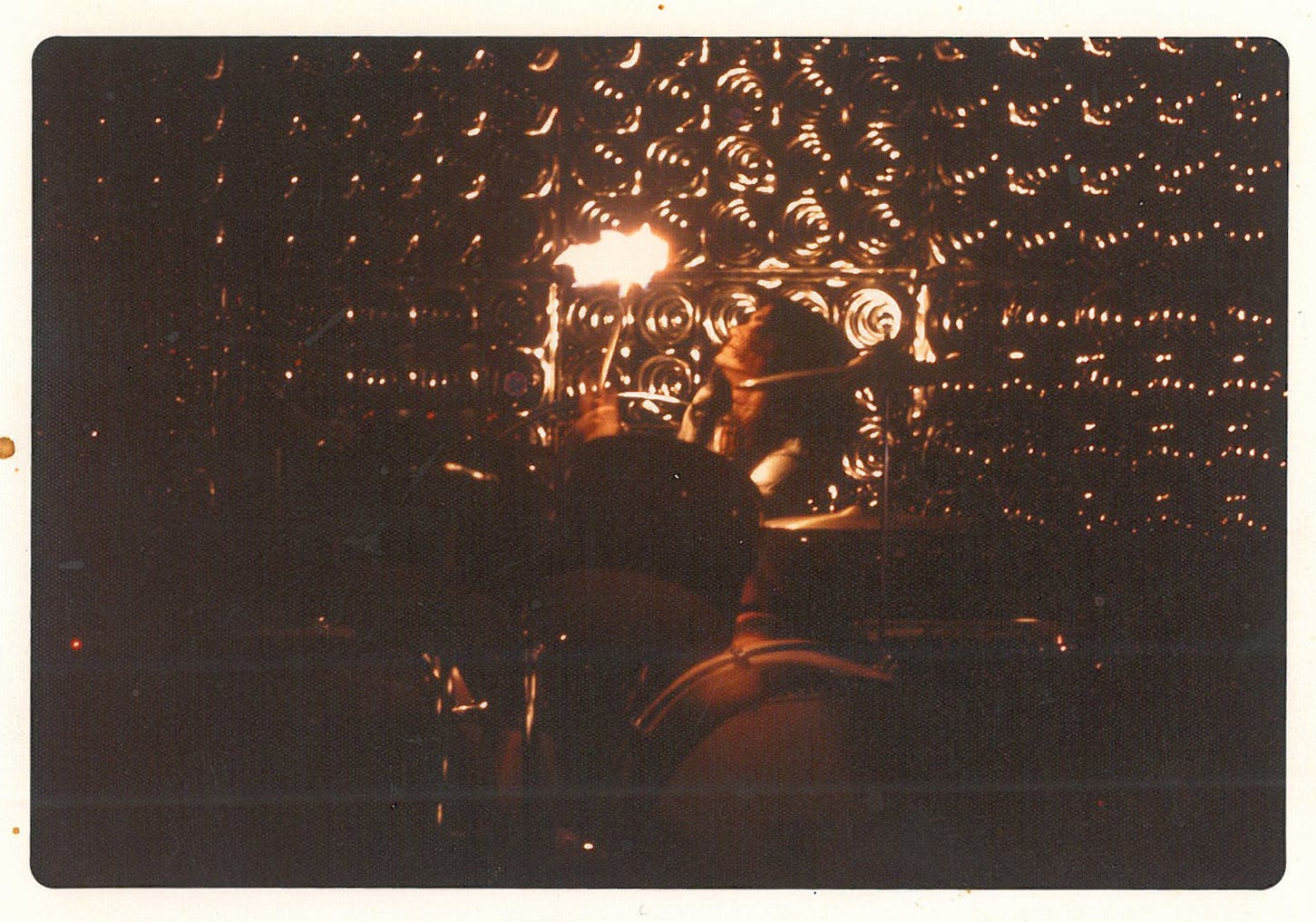
I had this great shot after we opened for a Brit group Savoy Brown.
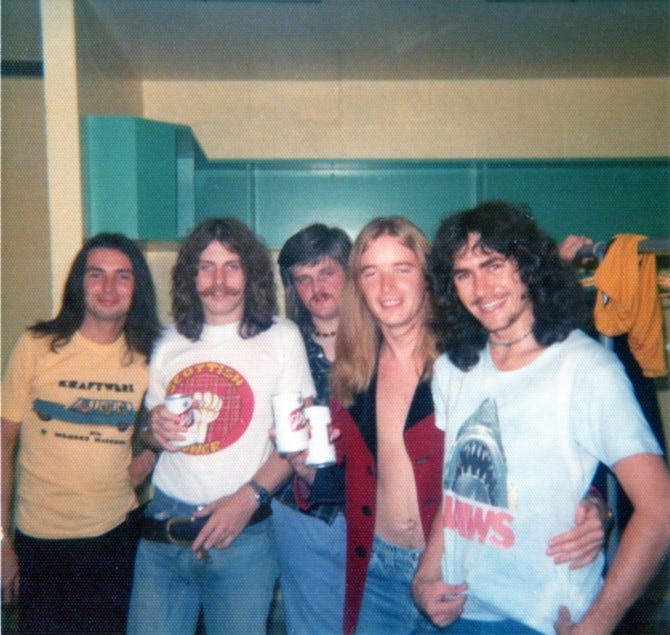
By that time I was listening to almost anything, including King Crimson, Yes, plus all the standard rockers like Johnny Winter and Santana. There were groups I just did not like. Sorry, never liked the Stones. To this day I only have 2 Stones songs on a 5,000 playlist. I greatly appreciated Joe Morello of the Dave Brubeck Quartet, whom I saw live in 1968-69, and Morello invited all the drummers backstage to talk.
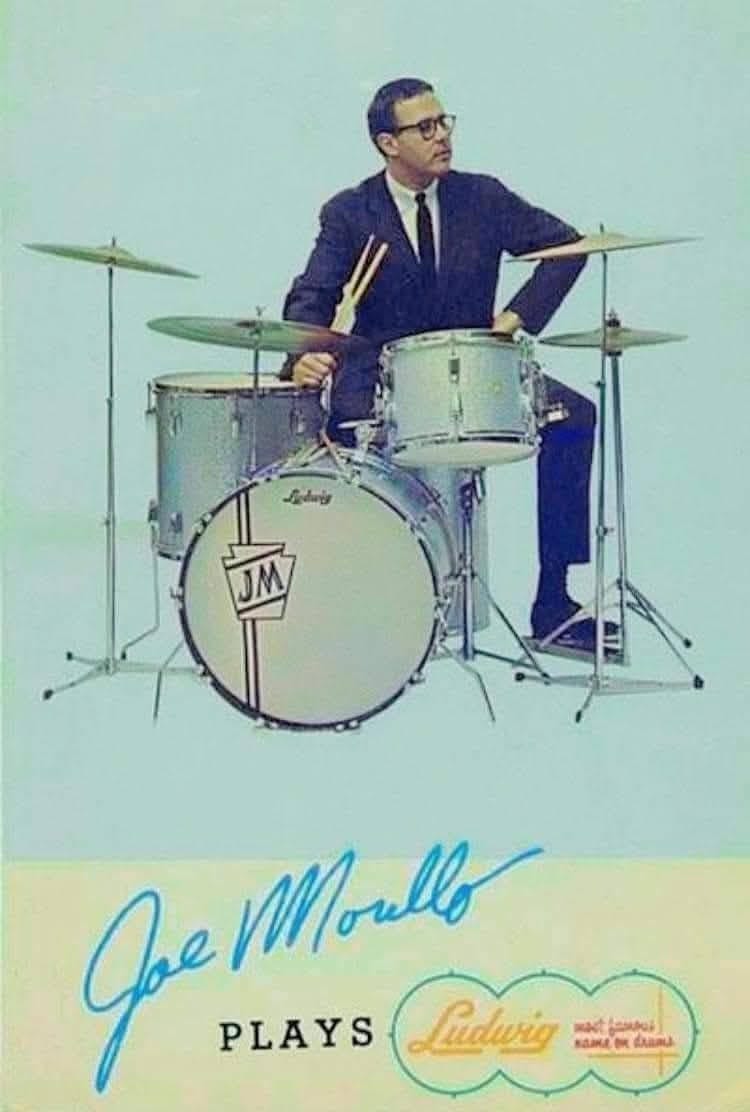
I never understood why good drumming couldn’t include some Ringo, Joe Morello, Mitch Mitchell (highly underrated), Ginger Baker, Ian Paice, and Corky Laing (one of my heroes, with “Mountain”). But by far, to me the greatest rock drummer of the era—-and it wasn’t close—-was Carmine Appice, first with Vanilla Fudge, then with a boogie band, Cactus. He was the first rocker to write a drum book (too late for me) and even had a gig on ESPN commenting on drum and bugle corps competitions.
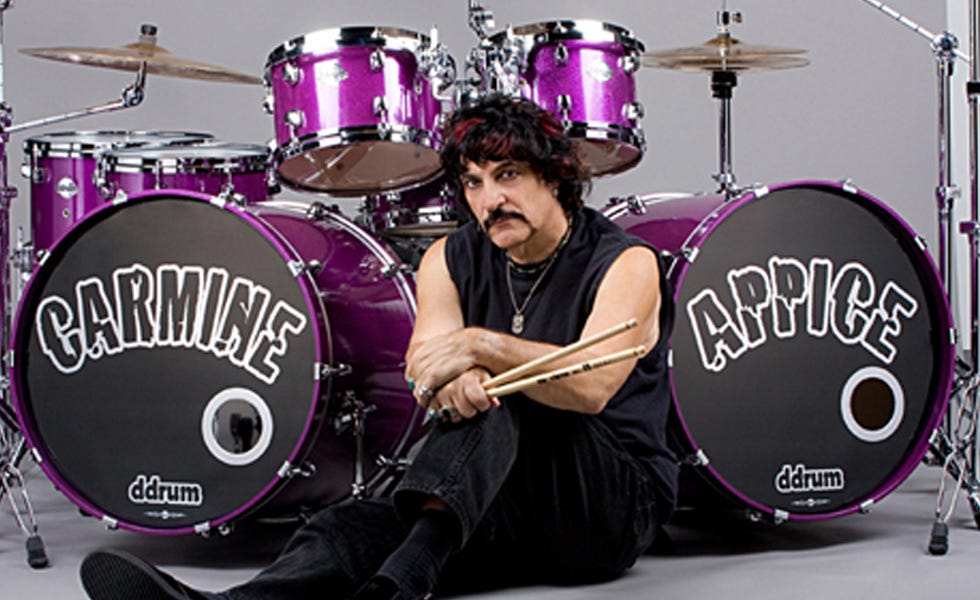
Here’s one of those weird factoids. While “Rampage” was in Florida, our guitarist (the one in the picture) abruptly quit. Didn’t say why. We somehow learned the guitarist from Cactus was available—-they had broken up. Jim McCarty was the essence of a great, extremely loud, rock guitarists. Not on Randy Rhodes’ level, but far better at learning how to find the groove. Anyway, Jim flew down and played our gig with us for three nights! What an honor. (I’m pretty sure he played the lick in the Mitch Ryder and the Detroit Wheels song, “Devil in a Blue Dress On.”) When the gig was over, it was clear he wasn’t going to play with us. As I walked him to the plane he said “You remind me a lot of Carmine.” That was the greatest compliment I ever heard. I said, “Thank you! Thank you!” He said, “It wasn’t meant as a compliment.”
A similar incident occurred after we opened for Steppenwolf in Tampa. After our set, I went backstage and up to the upper parts of the auditorium to watch Steppenwolf when a kid came running up to me yelling “Carmine!! You were great!” Again, all I could say was, “Thank you.” In truth, I was never even remotely in the same league as a single one of those I mentioned, except perhaps Corky Laing.
I very abruptly stopped drumming after “Rampage” broke up, but that’s another story. Many years later I played briefly with our church, and I was loud. People used to say, “I knew you were on drums when I came in the building.” With another exception—-another story—-I quit playing altogether. But I still revel in some of my newest favorites such as Todd Sucherman who tours with Styx (best rock drummer out there in my view) and redeveloped an appreciation for the incredible tasty drummer for Huey Lewis and the News, Bill Gibson.
https://www.facebook.com/share/v/17BNGeSfgY/
Look, there are people such as El Estepario Siberiano: this guy is a freak, utterly untouchable. No doubt. But I can’t tell if he has any what we would call soul. I felt the same about Carl Palmer and Neil Peart. Fantastic players, but where was the groove? Certainly no one could ask about the groove with John Bonham, who was great, but just didn’t seem to catch my fancy like, say, Cozy Powell, Jeff Beck’s drummer on “Rough and Ready.” On the other hand, Charlie Watts was just too simple. He made Ringo look like he was on meth.
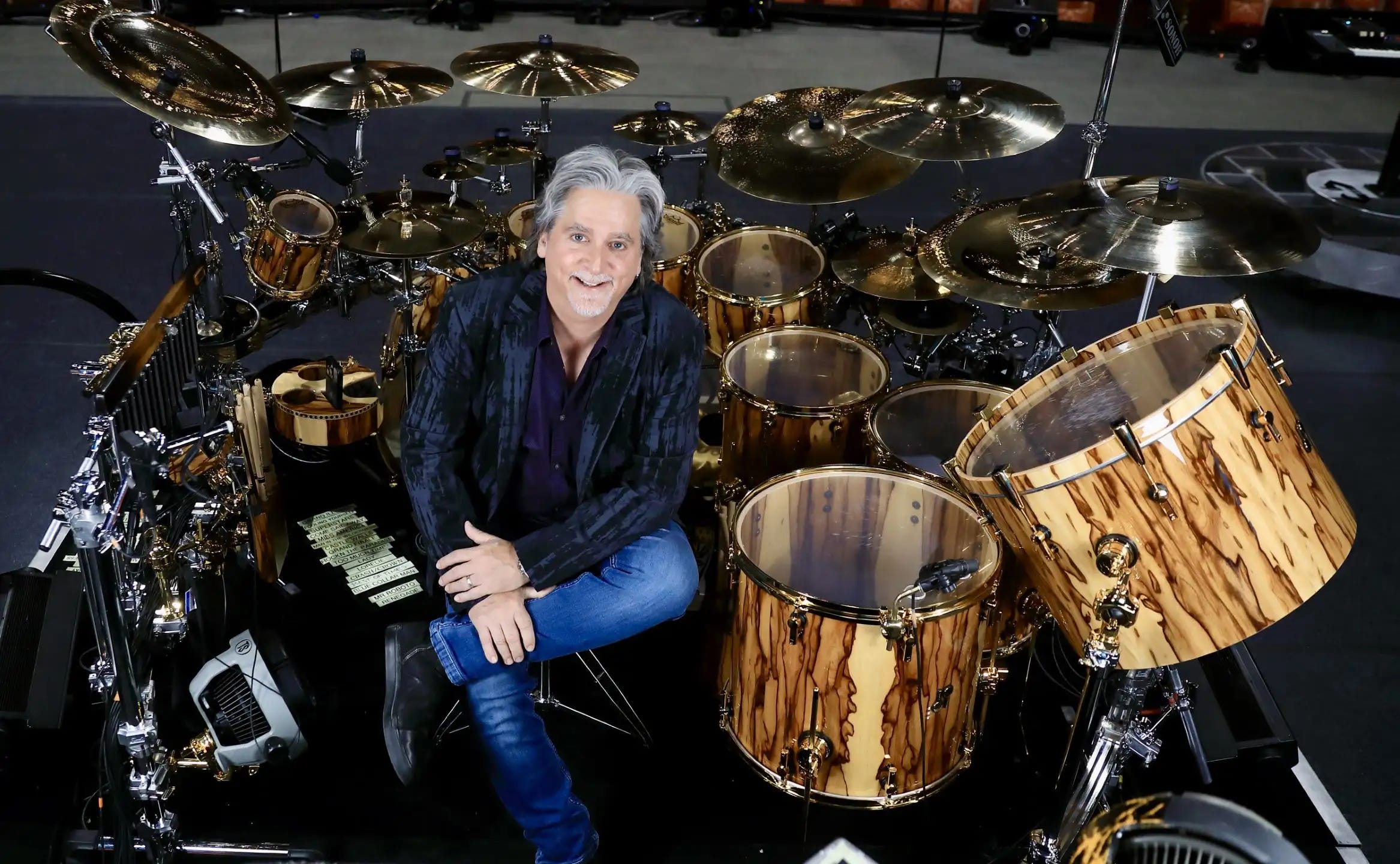
With Sucherman, every single cymbal stroke has a purpose. He never “just plays,” but despite his good speed (nothing like Silviano) he never overplays. I find too many of the drummers considered awesome just, well, overplay everything. Frank Beard of ZZ Top was a standout at playing just enough, but knowing where the groove was.
But Bill Gibson is in his own league. Listen to “Sports”—-every song. Listen to not only what I think is the perfect drum sound (although John Bonham was pretty close to perfect too) , Gibson’s fills are phenomenally tasty, inventive, and you usually say, “Gee, I wouldn’t have thought to put that there.” Anyway, I utterly hate the Silviano sound of cardboard cigar boxes. I like drums to ring, resonate. Survivor’s drummer Marc Droubay and Autograph’s drummer Keni Richards both had that loud, resonant booming sound I love.
Last comment. One thing I loved about both Mitch Mitchell and Ginger Baker was that as part of a trio, they didn’t just play the drum track (as did Don Brewer of Grand Funk), but rather they played “around the song.” Listen to Baker on “Dance the Night Away” or Mitchell on “May this Be Love” and you’ll see what I mean. Yes, I like the jazzier guys like Bill Bruford, who was perfect for Yes, but who was replaced by a guy who made them sound perfect, but different, Alan White.
In 2010, I wrote a book called Seven Events that Made America and which included a chapter on how rock music helped bring down the Berlin Wall. That project opened doors so I got to interview Ian Paice and Liberty DiVito while at the same time making friends with Bob Seger’s current touring drummer. While I love all this stuff, all I can say now is,
thank God I’m a writer and not a drummer. I couldn’t compete.
Larry Schweikart (@CyberneticsLS on Truth)
Rock drummer, Film maker,NYTimes #1 bestselling author
Link for Patriot’s History Vimeo
Link to buy larry a coffee
http://buymeacoffee.com/larrys
Love this stuff, Larry
https://www.youtube.com/watch?v=fibMiXZGNYk
Not gonna lie - I always used to dig the Latino drumming scene; Sheila E got me interested as a teenager, along with Gloria Estefan's Cuban albums, and Santana's rock take on it. Took me forever to figure out Sheila E's drumming lineage. Great stuff there, too. SUCH amazing talent.
I also remember John Lennon being asked by a reporter if he thought Ringo Starr was the greatest drummer in the world. Without missing a beat, he responded: "He's not even the best drummer in the Beatles." I know he was making a joke, but I thought that was unkind. Ringo really was a great drummer.